
Modular by Design
How it Works
The Pipe Climber Robot is built on a modular architecture that delivers exceptional mobility, stability, and payload capacity on small-diameter structures. Each interchangeable component is engineered to work seamlessly as part of a scalable robotic system, allowing the platform to adapt to a wide variety of inspection and maintenance environments.
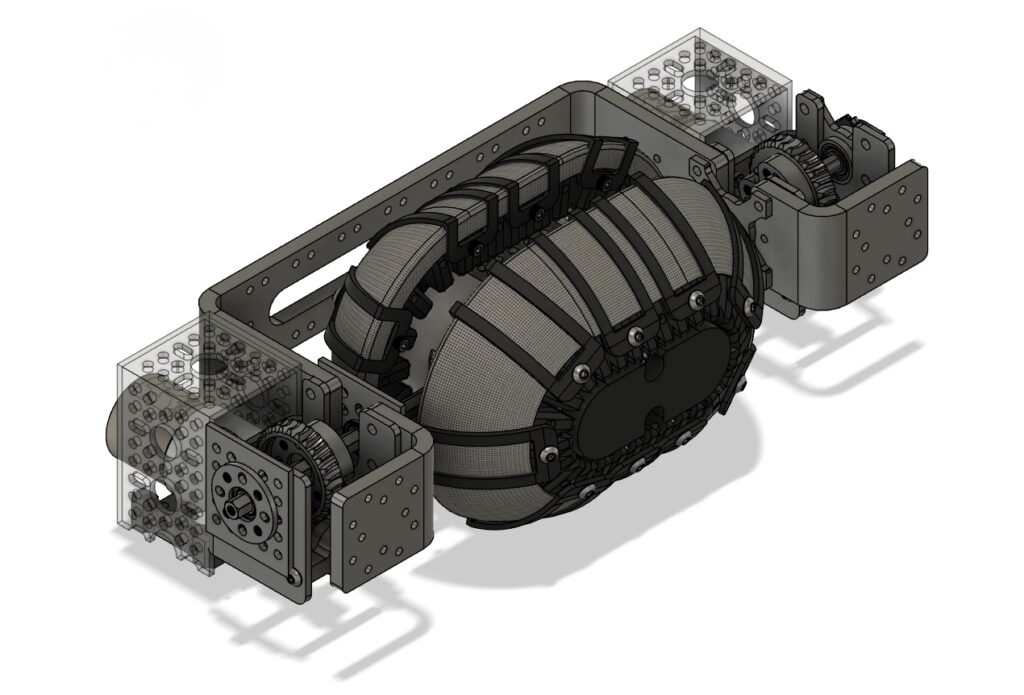
1. Drive Module
At the core of the system is the Drive Module, featuring an omnidirectional wheel that enables movement in both longitudinal and lateral directions.
This unique mobility allows the robot to traverse curved surfaces and navigate elbows, bends, and T-junctions while maintaining continuous contact with the structure.
2. Powered Hinges
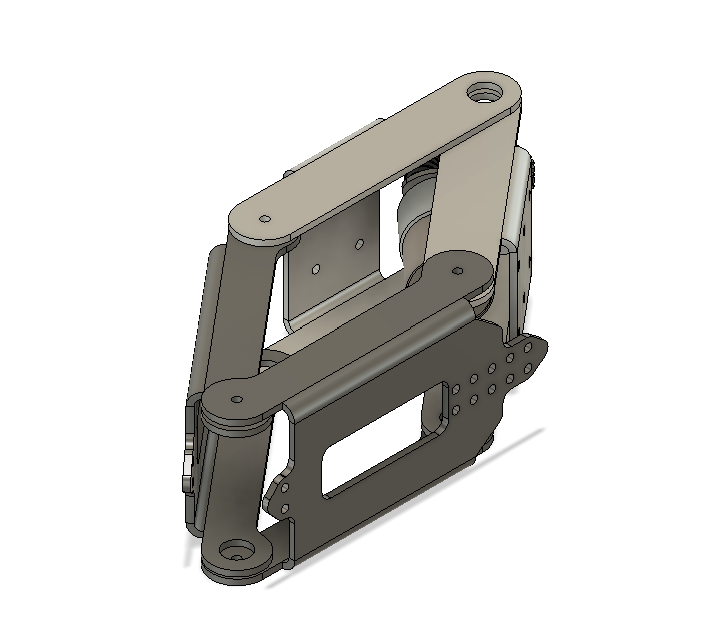
Each Drive Module is connected by powered, spring-loaded hinges that actively compress the system against the structure.
This adaptive mechanism allows the robot to conform to varying diameters while maintaining the traction needed for reliable operation.
3. Segment Assembly
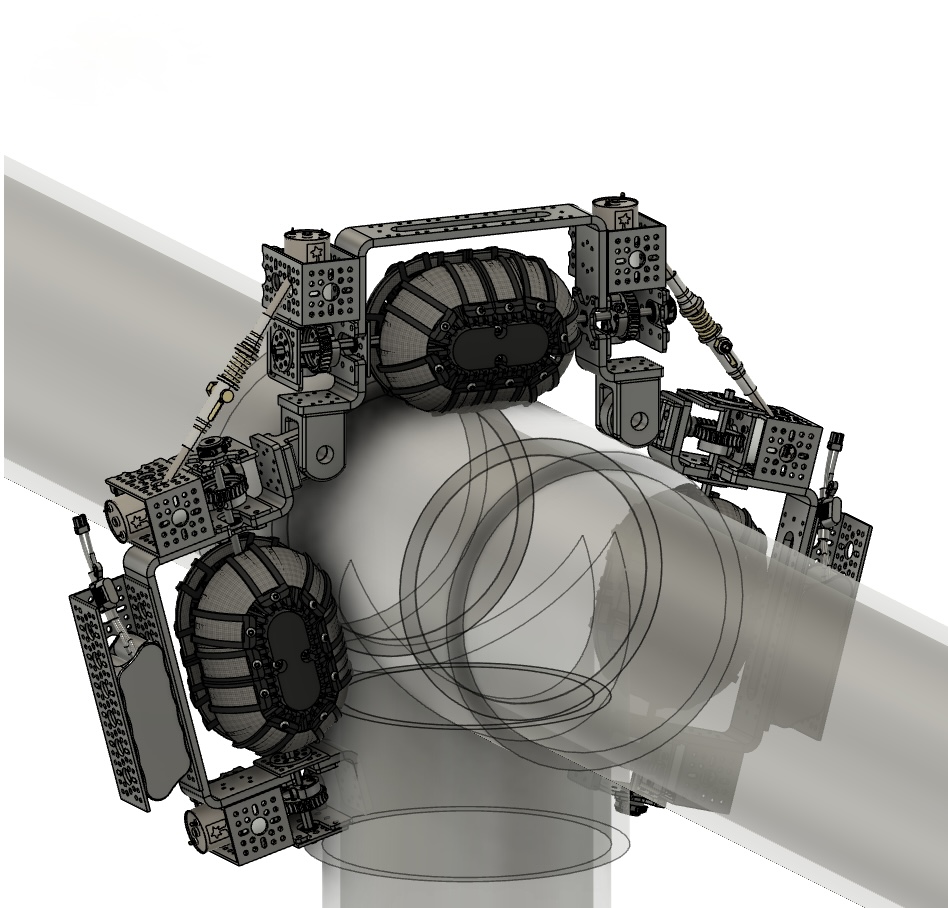
Multiple Drive Modules and Hinges combine to form a Segment: a curved assembly that wraps around the structure.
Segments can expand or contract to accommodate different diameters and transition between an open "C" configuration for installation and a closed "O" configuration for maximum stability during operation.
4. Safety Latch
An integrated Safety Latch secures each Segment once deployed.
In addition to increasing payload capacity, the latch provides a redundant mechanical safeguard that helps prevent catastrophic failure in the event of slippage or an unexpected disconnection.
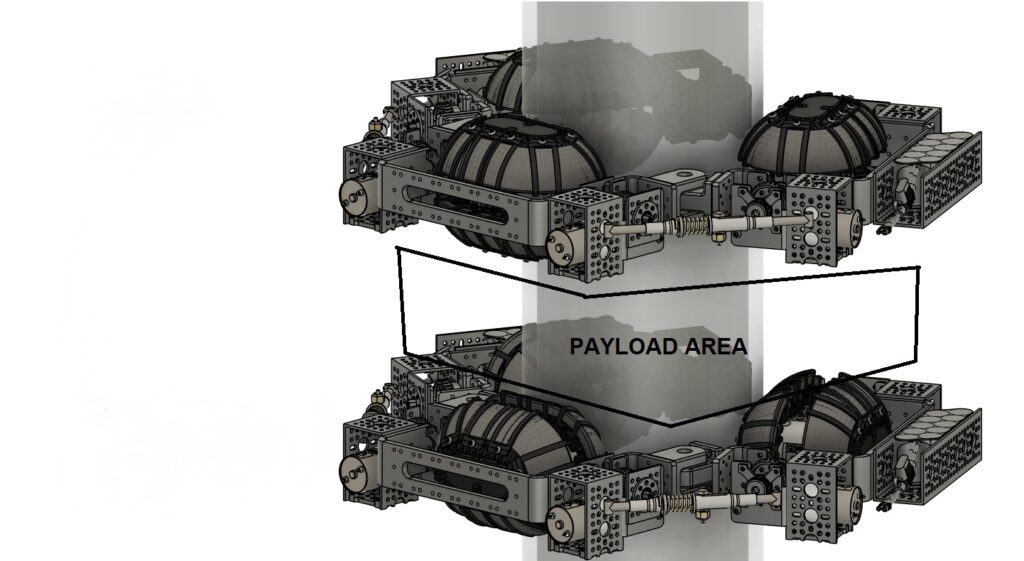
5. Superstructure
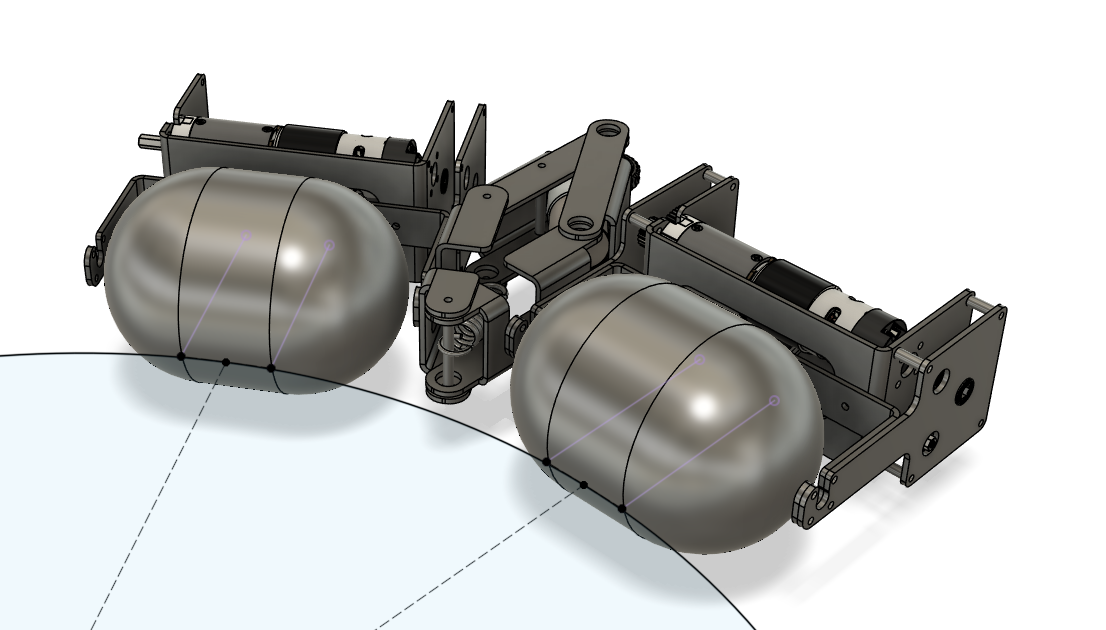
The Superstructure mechanically connects multiple Segments into a complete robotic system while supporting
mission-specific payloads.
Depending on the application, it can be configured as either a rigid connection or a pivoting mechanism, allowing the robot to transition between horizontal and vertical surfaces while carrying equipment.